
Custom Orthotics vs Store-Bought Insoles: Which Is Right for You?
When your feet hurt, a quick trip to the store for a pair of store-bought insoles can seem like an easy solution. They are affordable, widely available, and come in a variety of shapes and cushioning levels. But if you have ongoing foot pain, alignment problems, or a specific condition, you may need more than general-purpose support.
This is where the difference between custom orthotics and insoles becomes important. While both can provide cushioning and support, custom orthotics are specifically designed around an individual’s foot structure, movement patterns, and functional needs. Understanding these differences can help you determine whether you need simple arch support insoles or more personalized custom foot orthotics.
Find the Support Your Feet Really Need
Choosing between custom orthotics vs store-bought insoles doesn’t have to be confusing. By understanding how each option works, you’ll be better prepared to decide whether a readily available insole is enough or whether personalized support may be appropriate for your feet.
When Foot Pain Starts Changing Your Day
Foot discomfort can affect much more than your feet. A painful step can make you avoid exercise, shorten a shopping trip, change the way you walk, or make standing through a workday exhausting.
For some people, store-bought insoles provide enough cushioning to make everyday activities more comfortable. But others may continue experiencing pain because the underlying issue involves foot alignment, pressure distribution, or the way the feet interact with the rest of the body.
Custom orthotics for foot pain are designed with these individual factors in mind. Depending on the person’s needs, they may provide targeted foot alignment support, arch support, pressure redistribution, or gait support.
The goal isn’t simply to add something inside your shoes. It’s to provide the appropriate level of personalized foot support so you can walk, stand, work, and participate in everyday activities more comfortably.
“The right foot support isn’t necessarily the most expensive option—it’s the option that addresses what your feet actually need.”
So, are custom orthotics better than store-bought insoles? There isn’t one answer for everyone. In this guide, we’ll compare the two options, explain the difference between custom orthotics and insoles, discuss common conditions that may benefit from orthotic support, and show you how to choose between custom orthotics and insoles.
A Brief History of Foot Support: From Simple Inserts to Personalized Orthotics
People have been using various forms of footwear support for generations, but modern orthotic care has become much more individualized. Today’s prescription orthotics can be developed using professional assessments of foot structure, movement, and biomechanics rather than relying only on a generic shape. Advances in materials and manufacturing have also made custom orthotic inserts more precise and comfortable. What began as simple foot support has evolved into sophisticated customized orthotic devices designed to address individual mobility and support needs.
How to Choose Between Custom Orthotics and Insoles
The right choice depends on your symptoms, foot structure, lifestyle, and treatment goals. Before deciding between custom orthotics vs over-the-counter insoles, consider these important steps.
Step 1: Start With the Type of Foot Discomfort You’re Experiencing
If you experience occasional soreness after spending a long day on your feet, store-bought insoles may provide the cushioning or general support you need. However, persistent heel pain, arch pain, or foot pain may warrant a professional evaluation. Identifying the underlying cause is more useful than simply choosing the thickest or softest insole available.
Step 2: Consider Whether You Have a Specific Foot Condition
Certain conditions may benefit from individualized orthotic support. For example, people with plantar fasciitis may be evaluated for custom orthotics for plantar fasciitis, while people with flat feet or high arches may benefit from appropriately designed support. Orthotic care may also be considered for overpronation, heel pain, arch pain, or other biomechanical concerns.
Step 3: Understand How Custom Orthotics Are Different From Regular Insoles
One major difference is personalization. Store-bought insoles are generally manufactured in standard shapes and sizes for a broad range of users, while custom shoe inserts are designed around an individual’s specific needs. Personalized orthotics may address factors such as foot alignment, pressure distribution, and gait mechanics rather than simply adding cushioning.
Step 4: Get a Professional Assessment if Pain Persists
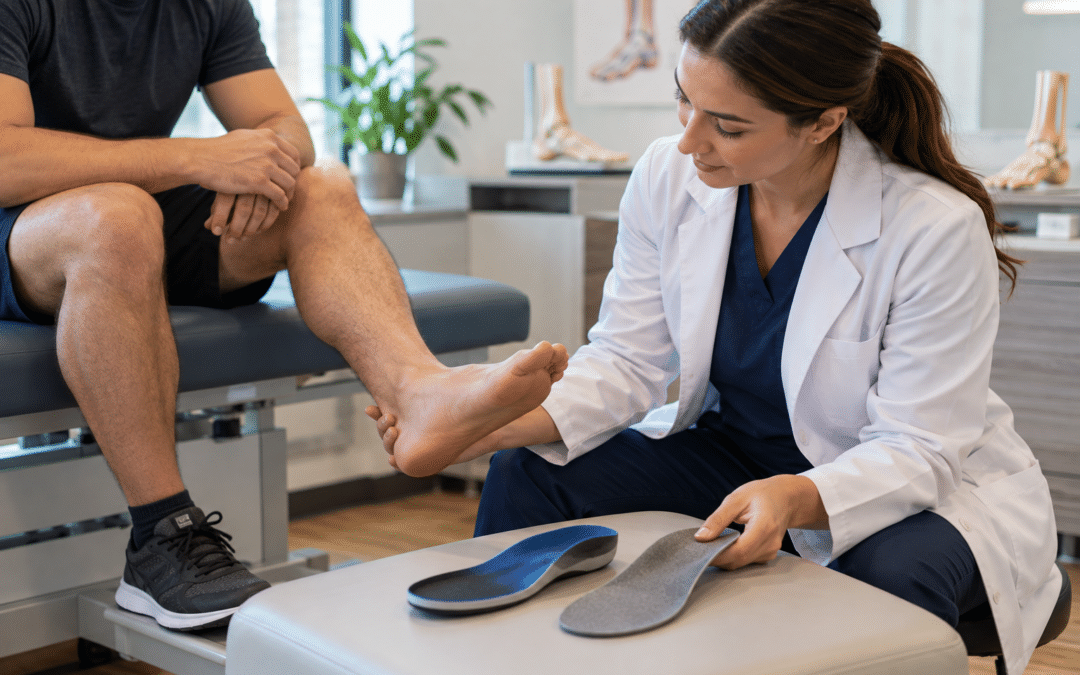
If you’re asking, “Do I need custom orthotics or over-the-counter insoles?” a professional evaluation can help provide a clearer answer. A biomechanical assessment may examine how your feet and lower limbs move, where pressure occurs, and whether alignment or gait issues contribute to discomfort. This information can help determine whether custom foot support is appropriate.
Step 5: Think About Your Daily Activities
Your lifestyle also matters when choosing foot support. Someone who spends several hours standing at work may have different needs from someone who primarily needs support while walking or exercising. Orthotics for walking and standing can be designed around specific functional requirements when a personalized solution is appropriate.
Step 6: Consider Comfort, Fit, and Long-Term Use
Even an effective orthotic isn’t useful if it doesn’t fit properly or isn’t comfortable enough to wear. Professional orthotic fitting helps ensure that a device works appropriately with your footwear and individual needs. Proper follow-up can also help identify whether adjustments are needed as your condition or activity level changes.
Step 7: Don’t Assume More Support Is Always Better
It can be tempting to assume that the most rigid or supportive product is automatically the best choice. That’s not necessarily true because the appropriate level and type of support depend on the individual. A professional can help determine whether you need general cushioning, arch support insoles, custom orthotics, or another form of mobility support.
Take the Next Step Toward Better Foot Support
At Fit-Well Prosthetic & Orthotic Center, we understand that every person’s feet and movement patterns are different. Our team can help evaluate your needs and determine whether custom foot orthotics, custom orthotic inserts, or another form of foot support may be appropriate for you.
If you’re experiencing persistent discomfort or wondering when should you get custom orthotics, don’t rely on guesswork. Contact Fit-Well Prosthetic & Orthotic Center to learn more about personalized orthotic care and professional fitting.
Take the next step toward greater comfort, foot alignment support, and mobility. Subscribe to our updates for more helpful information about orthotics, prosthetics, mobility, and personalized patient care.