
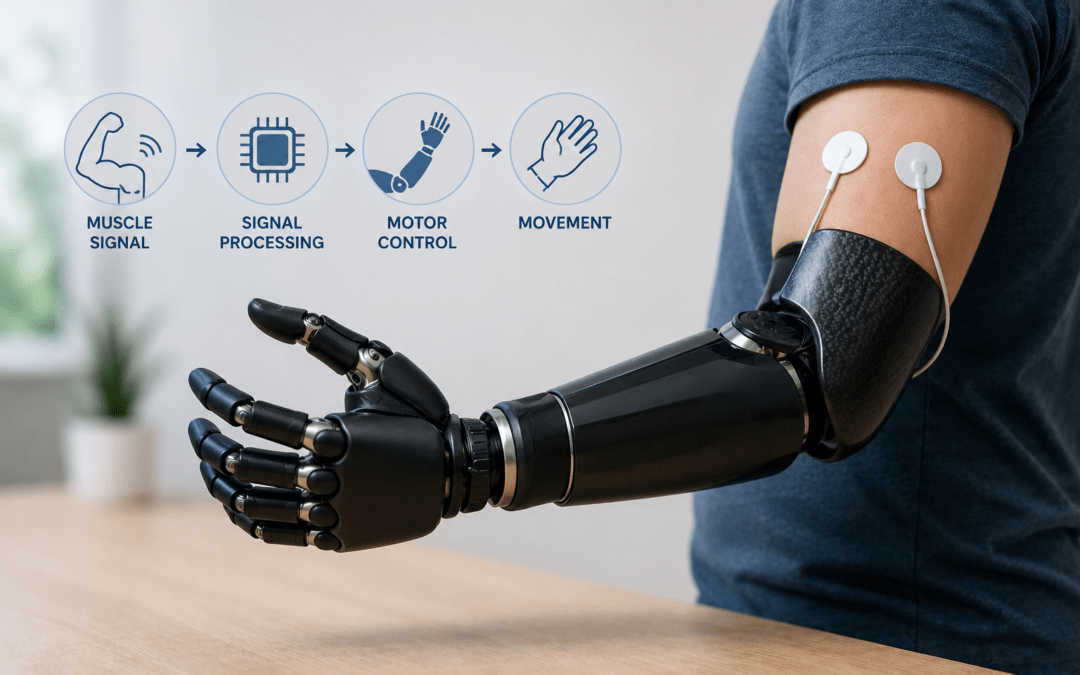
What Are Myoelectric Prosthetics and How Do They Work?
Advancements in prosthetic limb technology have transformed the lives of individuals with upper limb loss, making everyday tasks more natural and intuitive than ever before. Among the most innovative developments are myoelectric prosthetics—devices that use electrical signals from your own muscles to control movement. Whether you’re researching what are myoelectric prosthetics or exploring options after limb loss, understanding this technology can help you make informed decisions about your future mobility and independence.
Discover the Technology That Moves with You
Imagine controlling a prosthetic hand simply by thinking about moving your muscles. Thanks to advanced prosthetic technology, this is no longer science fiction. In this guide, you’ll learn how do myoelectric prosthetics work, who they are designed for, and why they continue to redefine what is possible for individuals living with upper limb loss.
Restoring More Than Movement
Losing an arm or hand changes more than physical ability—it affects confidence, independence, and everyday experiences. Tasks that once seemed effortless, like tying shoes, holding a coffee cup, or shaking someone’s hand, can suddenly become challenging.
Fortunately, today’s muscle-controlled prosthetics are designed to restore much more than function. A modern myoelectric prosthetic arm responds to electrical signals generated by muscles remaining in the residual limb. This allows users to perform everyday activities with smoother, more natural movements.
For many people, receiving a myoelectric prosthetic hand represents a fresh start. Instead of relying solely on body-powered mechanics, they gain access to sophisticated technology that supports greater precision, comfort, and independence in daily life.
“The most advanced prosthetics don’t simply replace what’s missing—they reconnect people with the lives they want to live.”
Keep reading to discover how does a myoelectric prosthetic arm work, the advantages of custom myoelectric prosthetics, how they compare to traditional devices, and whether you may be a good candidate for this remarkable technology.
A Brief History of Myoelectric Prosthetics
Although the idea of electrically controlled prosthetic limbs may sound futuristic, the first practical myoelectric prostheses were introduced during the 1960s. As electronics, sensors, and battery technology improved over the decades, these devices became lighter, faster, and more responsive. Today, electric prosthetic limbs can feature multiple grip patterns, individually powered fingers, and sophisticated sensors that make everyday tasks easier than ever before, representing one of the biggest milestones in advanced prosthetic technology.
Understanding Myoelectric Prosthetics: A Beginner’s Guide
Modern myoelectric prosthetic devices offer impressive functionality, but understanding how they work can make the technology much less intimidating. If you’re considering one for yourself or a loved one, these practical insights can help you know what to expect throughout the process.
Step 1: Learn How the Technology Works
One of the most common questions people ask is how do myoelectric prosthetics work. Small sensors inside the socket detect electrical signals naturally produced when you contract specific muscles in your residual limb. The prosthesis interprets those signals and converts them into movements, allowing the hand or arm to open, close, grip, or rotate. This muscle-driven system makes the prosthesis feel much more intuitive than many traditional alternatives.
Step 2: Understand Which Muscles Control the Device
Many people also wonder, what muscles control a myoelectric prosthesis? Typically, the remaining muscles in the forearm or upper arm generate electrical activity that the sensors recognize. With training, users learn how to contract different muscle groups to perform various movements with precision and consistency.
Step 3: Know Whether You’re a Good Candidate
Not every individual will require the same type of prosthesis. Who is a candidate for myoelectric prosthetics depends on several factors, including the level of limb loss, muscle health, overall physical condition, cognitive ability, and lifestyle goals. Your prosthetist will conduct a comprehensive evaluation to determine whether an upper limb myoelectric prosthesis is the most appropriate option for your needs.
Step 4: Commit to Training and Practice
Learning how to use a myoelectric prosthetic hand requires patience and consistent practice. Occupational therapy and prosthetic training help users master muscle control, improve coordination, and perform increasingly complex daily activities. Over time, simple tasks like eating, writing, carrying groceries, and using electronic devices become much more natural.
Step 5: Compare Your Prosthetic Options
Many patients ask about myoelectric prosthetics vs body-powered prosthetics. Body-powered devices use cables and body movements to operate the prosthesis, making them durable and lightweight. In contrast, myoelectric prosthetic devices offer more natural movement, multiple grip patterns, and greater precision, although they require batteries and electronic maintenance. Understanding the advantages of each option allows you to make an informed decision based on your personal needs.
Step 6: Consider the Long-Term Benefits
Many individuals eventually ask, are myoelectric prosthetics worth it? For many users, the answer is yes because the benefits of myoelectric prosthetics extend beyond improved mobility. These devices can increase independence, reduce physical strain, improve cosmetic appearance, and provide greater confidence during work, hobbies, and social interactions. While they often represent a larger investment, many users find that the long-term improvements in quality of life make them well worth considering.
Contact Fit-Well Prosthetic & Orthotic Center Today
At Fit-Well Prosthetic & Orthotic Center, we believe every individual deserves access to innovative mobility solutions that support independence and confidence. Our experienced team specializes in custom myoelectric prosthetics, personalized evaluations, and comprehensive rehabilitation designed around your unique goals.
If you’re interested in learning more about myoelectric prosthetics for upper limb amputees, schedule a consultation with our team today. We’ll answer your questions, explain your options, and help you determine whether a myoelectric prosthetic arm or electric prosthetic limb is the right solution for your lifestyle. Contact us today and take the next step toward restoring movement, confidence, and independence.