
Orthotics vs Prosthetics: Understanding the Key Differences That Change Lives
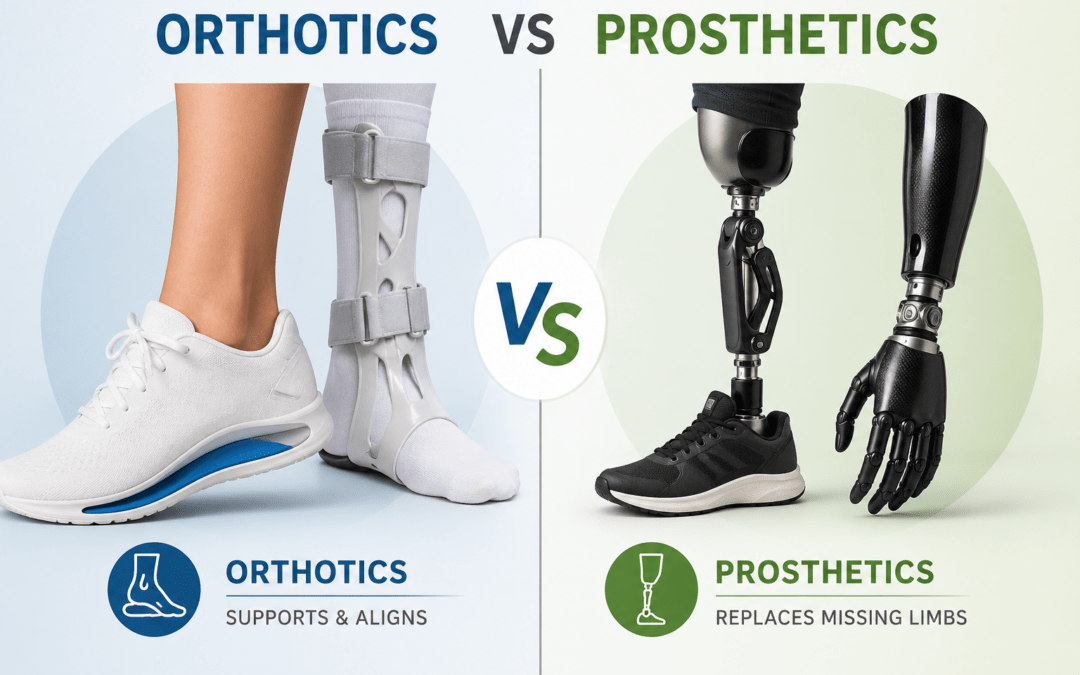
When it comes to mobility and physical support, many people ask: “Orthotics vs prosthetics—what’s the difference?” While both play essential roles in improving movement and quality of life, they serve very different purposes. Simply put, what are orthotics and prosthetics comes down to function—orthotics support and enhance existing body parts, while prosthetics replace those that are missing. Understanding the difference between orthotics and prosthetics is the first step toward finding the right solution for your needs.
Choosing between orthotic and prosthetic care can feel overwhelming, especially when you’re dealing with pain, injury, or limb loss. This guide will clearly break down orthotics vs prosthetics explained in a way that’s easy to understand—so you can confidently make informed decisions about your mobility, comfort, and independence.
The Human Side of Mobility and Recovery
Imagine struggling to walk due to chronic foot pain—or facing life after losing a limb. These experiences can be physically and emotionally challenging. The right support system can make all the difference.
For someone dealing with alignment issues or joint pain, orthotic devices examples like custom shoe inserts or braces can provide stability and relief. These solutions help the body function more efficiently, reducing discomfort and preventing further injury.
On the other hand, individuals experiencing limb loss rely on prosthetic devices types such as artificial legs, arms, or hands to regain independence. These devices are designed to restore both function and confidence, enabling users to return to daily routines and activities.
At its core, the orthotics vs prosthetics function distinction lies in enhancement versus replacement—but both share the same goal: improving lives.
“Orthotics support what you have—prosthetics replace what you’ve lost—but both restore what matters most: your ability to move forward.”
What You’ll Learn Next
In the sections ahead, we’ll dive deeper into the orthotics vs prosthetics meaning, explore the orthotics definition medical and prosthetics definition medical, and provide a clear orthotic vs prosthetic devices comparison—along with practical advice to help you choose the right path.
A Brief History: From Simple Tools to Advanced Solutions
The evolution of orthotics and prosthetics dates back thousands of years. Early orthotic supports were simple bandages or splints used to stabilize injuries, while ancient prosthetics included wooden toes and rudimentary limbs found in Egyptian mummies. Today, advancements in materials and design have revolutionized both fields. Modern orthotics use precise biomechanical data for custom support, while prosthetics incorporate robotics and microprocessors—showcasing how innovation continues to redefine what are orthotics and what are prosthetics in today’s world.
Practical Guide: Choosing the Right Mobility Solution
Understanding the difference between orthotics and prosthetics is just the beginning. Knowing how to choose the right solution for your situation can significantly impact your comfort, mobility, and long-term health. Here are practical steps to guide you:
Step 1: Identify Your Specific Needs
Start by understanding whether you need support or replacement. If you’re dealing with pain, misalignment, or injury, orthotics may be the right solution. If you’ve experienced limb loss, prosthetics are designed to restore function. A proper assessment ensures you’re addressing the root of the issue, not just the symptoms.
Step 2: Learn the Definitions and Functions
Having a clear understanding of the orthotics definition medical and prosthetics definition medical helps you make informed decisions. Orthotics are devices that support or correct musculoskeletal function, while prosthetics replace missing limbs. Knowing this distinction clarifies the orthotics vs prosthetics meaning and prevents confusion when exploring treatment options.
Step 3: Explore Device Options
There are many orthotic devices examples, including shoe inserts, ankle-foot orthoses (AFOs), and spinal braces. Similarly, various prosthetic devices types exist, from basic mechanical limbs to advanced microprocessor-controlled systems. Exploring your options ensures you find a solution that aligns with your lifestyle and mobility goals.
Step 4: Consult with a Specialist
A certified prosthetist or orthotist can evaluate your condition and recommend the best course of action. Their expertise is essential in creating customized solutions tailored to your body and needs. Professional guidance ensures proper fit, function, and long-term success.
Step 5: Focus on Comfort and Adaptation
Whether you’re using orthotics or prosthetics, adjustment takes time. Start slowly and allow your body to adapt to the device. Regular follow-ups and adjustments will improve comfort and performance, helping you fully benefit from your mobility solution.
Take the Next Step Toward Better Mobility
At Fit-Well Prosthetic & Orthotic Center, we specialize in helping individuals understand the orthotics vs prosthetics journey and find the right solution for their unique needs. Whether you’re exploring support options or navigating life after limb loss, our expert team is here to guide you every step of the way.
Don’t let uncertainty hold you back—contact us today to learn more about personalized care, advanced solutions, and how we can help you move with confidence again.