
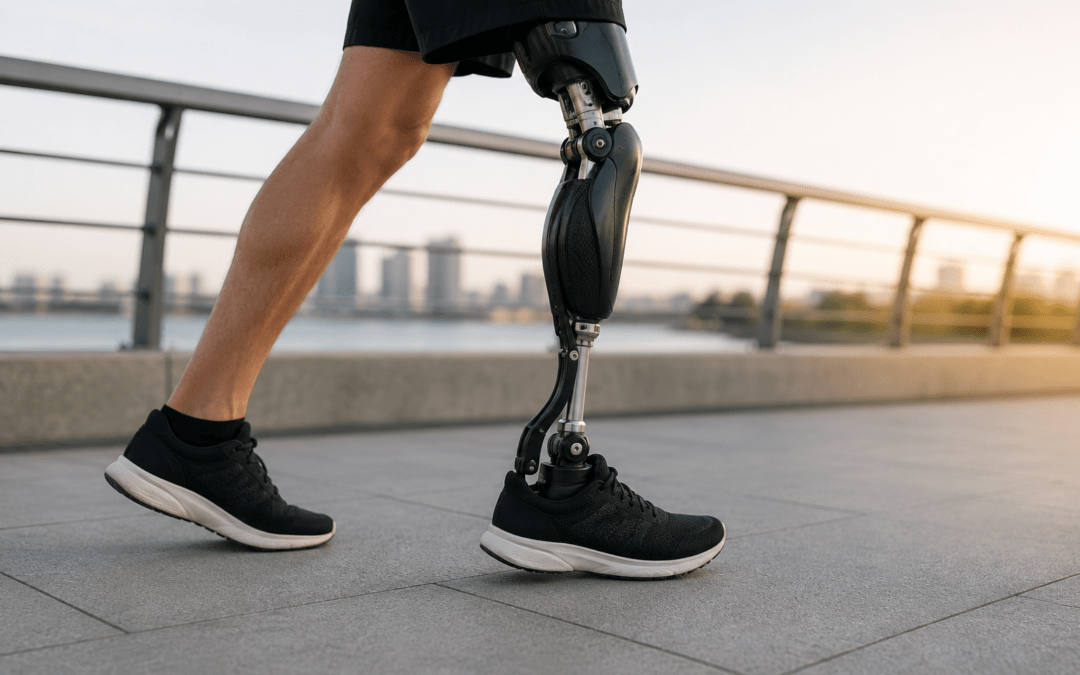
Microprocessor-Controlled Prosthetic Legs: A Breakthrough in Mobility
The world of lower limb prosthetics has evolved dramatically over the past few decades. One of the most significant innovations is the development of microprocessor-controlled prosthetic legs, designed to provide greater stability, smoother movement, and increased confidence for people living with limb loss. Unlike traditional mechanical prostheses, these intelligent systems continuously adapt to your movements, making walking safer and more natural.
Whether you’re considering a prosthetic leg with microprocessor knee or simply exploring the latest advancements in mobility, understanding this remarkable technology can help you make informed decisions about your rehabilitation journey.
Discover the Future of Walking
Imagine taking each step with greater confidence, improved balance, and technology that responds to your movement in real time. In this guide, you’ll discover how microprocessor-controlled prosthetic legs work, who benefits most from them, and why they have become one of the most advanced prosthetic mobility solutions available today.
Walking Toward a New Beginning
Losing a leg affects much more than physical mobility—it can impact independence, confidence, work, recreation, and daily routines. Many people worry they’ll never walk comfortably again or return to the activities they once loved.
Fortunately, today’s advanced prosthetic legs are changing that reality. Equipped with a computerized prosthetic knee, these devices monitor movement hundreds of times every second, adjusting resistance to provide smoother walking on level ground, stairs, ramps, and uneven terrain.
For many users, a microprocessor prosthetic knee represents more than cutting-edge technology—it represents freedom. Combined with professional rehabilitation and a properly fitted custom prosthetic leg, these innovations allow many individuals to regain independence and participate in life with renewed confidence.
“The best prosthetic technology doesn’t simply help you walk—it helps you move through life with confidence.”
What You’ll Learn
In the sections ahead, you’ll learn the science behind smart prosthetic technology, compare microprocessor prosthetic knee vs mechanical knee systems, discover who benefits most from these devices, and explore how rehabilitation maximizes long-term success.
A Brief History of Intelligent Prosthetic Technology
For centuries, prosthetic legs relied entirely on simple mechanical joints and manual control. While these designs restored basic mobility, they required significant physical effort and often lacked stability. Modern prosthetic limb innovation has completely transformed the field. Today’s microprocessor prosthetics use onboard sensors, advanced software, and real-time processing to monitor walking patterns, automatically adjusting knee movement for safer, more efficient mobility. This breakthrough has become one of the most significant advancements in prosthetic walking technology, giving users greater confidence and freedom in their everyday lives.
Making the Most of a Microprocessor Prosthetic Leg
Choosing a prosthetic leg is an important decision, and understanding how advanced technology supports your mobility can help you get the most from your rehabilitation. A microprocessor-controlled prosthetic leg combines intelligent engineering with personalized care, but successful outcomes also depend on proper fitting, training, and realistic expectations. Here are six important things every prospective user should know.
Step 1: Understand How the Technology Works
Many people ask how microprocessor-controlled prosthetic legs work. Small sensors built into the prosthesis continuously collect information about your walking speed, knee angle, weight distribution, and movement. The onboard computer processes this information in real time and automatically adjusts the adaptive prosthetic knee to create smoother, safer movement. This allows the prosthesis to respond naturally as you walk across different surfaces or change pace.
Step 2: Know Whether You’re a Good Candidate
If you’re wondering who can benefit from a microprocessor prosthetic leg, the answer depends on several factors, including your overall health, activity level, rehabilitation goals, and lifestyle. These devices are especially beneficial for active individuals, people who frequently navigate uneven terrain, and those seeking improved balance and confidence. Your prosthetist will perform a comprehensive evaluation to determine whether a microprocessor prosthetic leg for amputees is the best solution for your specific needs.
Step 3: Compare Microprocessor and Mechanical Knees
One of the most common comparisons is microprocessor prosthetic knee vs mechanical knee. Traditional mechanical knees rely on fixed settings and manual adjustments, while a computerized prosthetic knee constantly adapts to changing conditions throughout the day. This intelligent response often provides improved safety, smoother gait, reduced falls, and greater comfort, making it one of the preferred choices for many modern prosthetic users.
Step 4: Commit to Prosthetic Fitting and Rehabilitation
Even the most advanced prosthetic leg with microprocessor knee requires professional fitting and training. During prosthetic fitting and training, specialists customize the device to your body while physical therapists teach proper walking techniques, balance strategies, and safe movement. Ongoing prosthetic rehabilitation ensures you continue improving strength, coordination, and confidence as you adapt to your new prosthesis.
Step 5: Take Advantage of Advanced Mobility Features
Today’s advanced lower limb prosthetics are designed to support a wide variety of everyday activities. Many systems include stumble recovery features, adjustable walking modes, and technology that automatically adapts to slopes, stairs, and uneven terrain. Combined with gait analysis prosthetics, these innovations help optimize movement while improving prosthetic stability and balance, making everyday mobility more comfortable and efficient.
Step 6: Focus on Long-Term Independence
The benefits of microprocessor prosthetic knees extend far beyond smoother walking. Many users report greater confidence, reduced fatigue, improved posture, and increased participation in work, recreation, and social activities. Although there is an adjustment period when adapting to a microprocessor prosthetic leg, the long-term improvements in mobility and quality of life often make these devices an excellent investment for individuals seeking the best prosthetic knee for active individuals and greater independence.
Experience the Next Generation of Mobility
At Fit-Well Prosthetic & Orthotic Center, we’re committed to helping every patient achieve their highest level of independence through personalized care and the latest smart prosthetic technology. From evaluation and custom prosthetic leg design to rehabilitation and ongoing support, our experienced team is here to guide you every step of the way.
If you’re interested in learning whether microprocessor-controlled prosthetic legs are right for you, contact Fit-Well Prosthetic & Orthotic Center today. We’ll explain your options, answer your questions, and help you discover how today’s advanced prosthetic legs can restore confidence, improve mobility, and enhance your quality of life. Subscribe to our updates for more educational resources on prosthetic innovations, rehabilitation, and mobility solutions.