
Pediatric Prosthetics: What Parents Should Know
When a child experiences limb loss, parents naturally have questions about mobility, development, school, activities, and the future. Pediatric prosthetics can help children participate in everyday activities while supporting their growth and independence. Because children are constantly developing, their prosthetic needs can also change over time.
Today’s prosthetics for children are designed with comfort, function, activity level, and growth in mind. From pediatric lower limb prosthetics that support walking to pediatric upper limb prosthetics that assist with reaching and everyday tasks, individualized care can help children discover what they can accomplish with the right support.
Helping Your Child Move Forward With Confidence
Choosing a prosthetic limb for a child can feel overwhelming, but parents don’t have to navigate the process alone. With the right information and a team experienced in pediatric prosthetic care, families can approach each stage with greater confidence.
This guide explains what parents should know about pediatric prosthetics, from the initial evaluation and fitting to rehabilitation, maintenance, and adapting to a changing body.
More Than a Prosthetic Limb
For a child, the ability to run across a playground, ride a bike, play with friends, or participate in school activities can mean everything. When limb loss changes how a child moves or interacts with the world, it can also affect confidence and a family’s sense of normalcy.
A prosthesis isn’t simply a device that replaces a missing limb. Properly selected prosthetic limbs for children can become an important part of a child’s daily routine, helping them explore their environment and develop new skills.
Children also have a remarkable ability to learn and adapt. With appropriate prosthetic training for children, physical or occupational therapy, and encouragement from parents and caregivers, many children learn how to incorporate their prosthesis into everyday activities.
The goal of pediatric prosthetics services is not to force every child into the same solution. Instead, the goal is to find a child mobility solution that supports the child’s individual development, activities, and goals.
“The goal of a child’s prosthesis isn’t simply to replace what’s missing. It’s to give that child more opportunities to explore, learn, play, and grow.”
What Parents Will Learn
Understanding how pediatric prosthetics work can make the process much less intimidating. In the sections below, we’ll explore how to choose a prosthetic limb for a child, what happens during pediatric prosthetic fitting, why rehabilitation matters, and how parents can help children adapt to their new device.
A Brief History: Prosthetics Have Come a Long Way
Prosthetic limbs have been used for thousands of years, but today’s children’s prosthetics are dramatically different from early artificial limbs. Modern materials, improved designs, and better fitting techniques have made prostheses lighter, more functional, and more comfortable. For growing children, today’s adjustable pediatric prosthetics can also be designed with future changes in mind, helping families manage the evolving needs of prosthetics for growing children.
A Parent’s Roadmap to Pediatric Prosthetic Care
Every child is different, so there isn’t one universal approach to pediatric prosthetics. A successful experience usually involves collaboration between the child, parents, prosthetist, physicians, therapists, teachers, and other members of the child’s support network. The following steps can help families understand what to expect and make the process more manageable.
Step 1: Start With a Comprehensive Evaluation
The first stage is understanding your child’s physical needs, developmental stage, activity level, and goals. A prosthetist can evaluate the residual limb and discuss whether a pediatric prosthetic limb could help with specific activities or mobility needs. This assessment is an important starting point for determining what type of device may be appropriate.
Step 2: Choose a Prosthesis Designed for Your Child
Knowing how to choose a prosthetic limb for a child involves more than selecting a device based on appearance. The prosthesis should be appropriate for the child’s age, limb difference, activity level, development, and everyday environment. Custom pediatric prosthetics can be designed around these individual considerations, helping provide appropriate support as children participate in school, play, and other activities.
Step 3: Understand the Pediatric Prosthetic Fitting Process
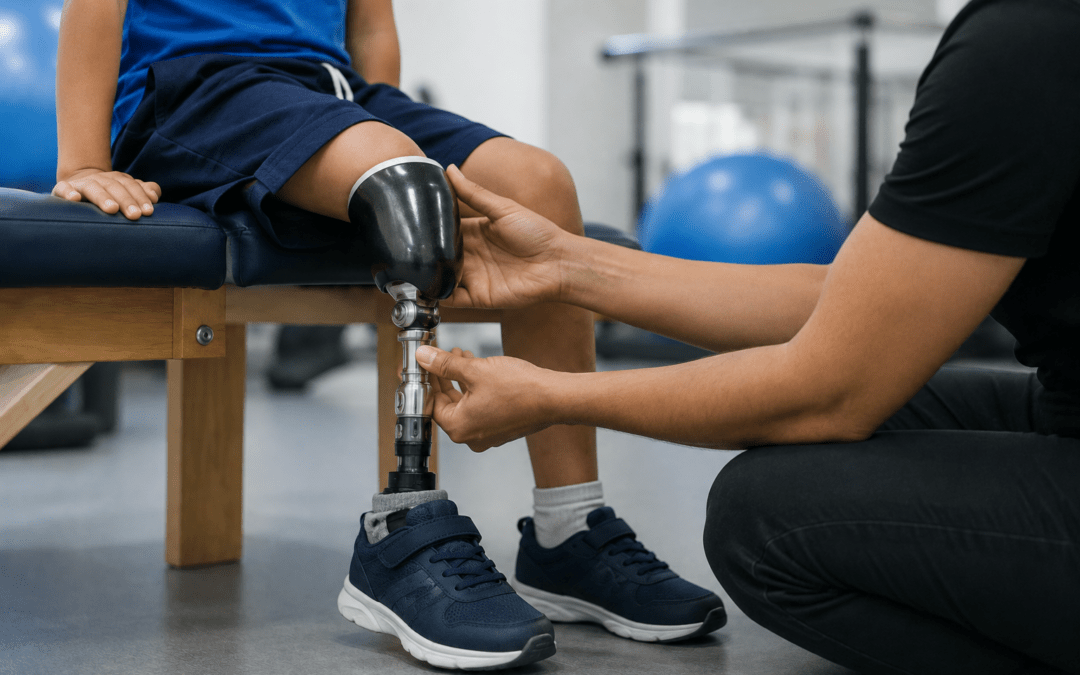
The pediatric prosthetic fitting process typically involves measurements, design, fitting, and adjustments. Because children grow quickly, their prosthetic device may need periodic modifications or replacement as their bodies change. Proper fitting is especially important because comfort and functionality can influence how willing a child is to use the device.
Step 4: Make Rehabilitation Part of the Journey
A prosthesis works best when a child learns how to use it effectively. Pediatric prosthetic rehabilitation may include physical therapy, occupational therapy, balance activities, strengthening exercises, and functional training. For children using lower limb prostheses, pediatric gait training can help them develop walking skills and become more confident with their movement.
Step 5: Give Your Child Time to Adapt
Parents often wonder how children adapt to prosthetic limbs. Adaptation is different for every child and may happen gradually as the child becomes more comfortable with the device. Encouraging children without pressuring them can help make the experience positive, while celebrating small accomplishments can build confidence.
Step 6: Keep Up With Maintenance and Adjustments
Regular care is an important part of pediatric prosthetic care. Parents should follow recommended cleaning and maintenance instructions, inspect the device for signs of wear, and pay attention to changes in comfort or fit. Prosthetic maintenance for children also includes regular professional checkups so adjustments can be made as the child grows and becomes more active.
Step 7: Build a Strong Support System
Children benefit from encouragement and understanding from the people around them. Pediatric amputee support can include family members, therapists, teachers, healthcare professionals, and peer communities that help children feel understood and confident. Creating an environment where children can ask questions and express their feelings can make adapting to a child prosthetic limb easier.
Help Your Child Take the Next Step
At Fit-Well Prosthetic & Orthotic Center, we understand that choosing a prosthesis for a child is about much more than finding the right device. It’s about supporting growth, development, mobility, confidence, and the activities that make childhood meaningful.
Our team provides personalized pediatric prosthetics services, including evaluation, fitting, rehabilitation support, and ongoing care. Whether your child needs pediatric upper limb prosthetics, pediatric lower limb prosthetics, or another personalized mobility solution, we’re here to help your family understand the available options.
Contact Fit-Well Prosthetic & Orthotic Center today to learn more about custom pediatric prosthetics and take the next step toward helping your child move, explore, and grow with confidence. Subscribe to our updates for more helpful information about pediatric orthotics, prosthetics, rehabilitation, and mobility solutions.